And How Our New Farm Collection Helps Kids Learn Through Play
If you’ve ever spent time with a toddler, you’ve likely noticed how quickly “moo,” “baa,” and “neigh” become part of their vocabulary. There’s a good reason for that: animal sounds are often among the very first words young children learn, and they play a powerful role in early speech and cognitive development.
To celebrate this important stage of learning, eeBoo is excited to introduce our new Farm Collection—a trio of beautifully illustrated, developmentally thoughtful products designed to help young children connect language, imagery, and sound through playful, hands-on exploration.
Let’s take a closer look at why animal sounds matter so much—and how each item in our collection supports early learning in a joyful, meaningful way.
Why Animal Sounds Matter in Early Childhood Development
Animal sounds are simple, engaging, and full of repetition—three qualities that make them ideal for early speech learning. Here’s why they’re so impactful:
1. They’re easy for young mouths to pronounce
Sounds like “moo,” “baa,” “oink,” and “neigh” use simple consonant-vowel patterns. These are often easier for toddlers to produce than full words like “cow” or “sheep.”
2. They strengthen sound–meaning connections
When children associate a picture of a cow with “moo,” they’re practicing symbolic thinking—the foundation of language and literacy.
3. They invite interactive play
Parents naturally exaggerate and repeat animal sounds, creating a back-and-forth rhythm that strengthens communication skills.
4. They support memory and categorization
Learning which sound belongs to which animal helps children sort, classify, and recall information—early cognitive skills that support reading and problem-solving later on.
Our Farm Collection was designed with all of this in mind.
Meet the Collection
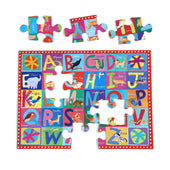
🐄 My Farm Alphabet 36-Piece Giant Puzzle
This oversized floor puzzle introduces the alphabet through friendly farm scenes, helping kids connect letters, animals, and actions. As children build the puzzle, they naturally practice:
- Letter recognition
- Vocabulary building
- Fine-motor coordination
- Identifying animals and their sounds
Its large pieces are perfect for young hands, and the vibrant illustrations spark conversations like “What sound does the goat make?”—turning puzzle time into an early language lesson.

🐔 Pre-School Little Farm Matching Game
Simple, sweet, and developmentally perfect for ages 3+, this matching game encourages children to pair farm animals, tools, and scenes. Through play, children strengthen:
- Memory and concentration
- Visual matching skills
- Verbal labeling (naming animals and sounds)
Matching a pig to a pig is rewarding—but saying “oink!” along the way is what makes it fun. This natural vocalization helps young children practice sounds essential to speech development.

🐷 Little Farm Head to Toe Dominoes
This playful twist on traditional dominoes uses top-and-bottom illustrations of farm animals. Oversized and sturdy, these dominoes promote:
- Sequencing and logical thinking
- Observation skills
- Collaborative play
- Language-rich moments (“Where’s the horse’s head? What sound does it make?”)
As children match heads to tails or create long barnyard “trains,” they reinforce both animal recognition and the fun, familiar sounds that come with each character.

Bringing Language Learning to the Barnyard
Kids learn best when they’re engaged, curious, and having fun. Our Farm Collection taps into that natural joy by combining beautiful art, sturdy pieces for little hands, and plenty of opportunities to practice early vocabulary.
Whether your child is building a giant alphabet puzzle, flipping matching cards, or creating a chain of domino animals, each activity ignites play that’s full of imagination—and full of language.
For parents and caregivers, simply join in the fun:
Make the sounds, name the animals, laugh together.
Every “moo” and “baa” is a building block for future communication.